

DOT Inspections for Safer, Compliant Fleets
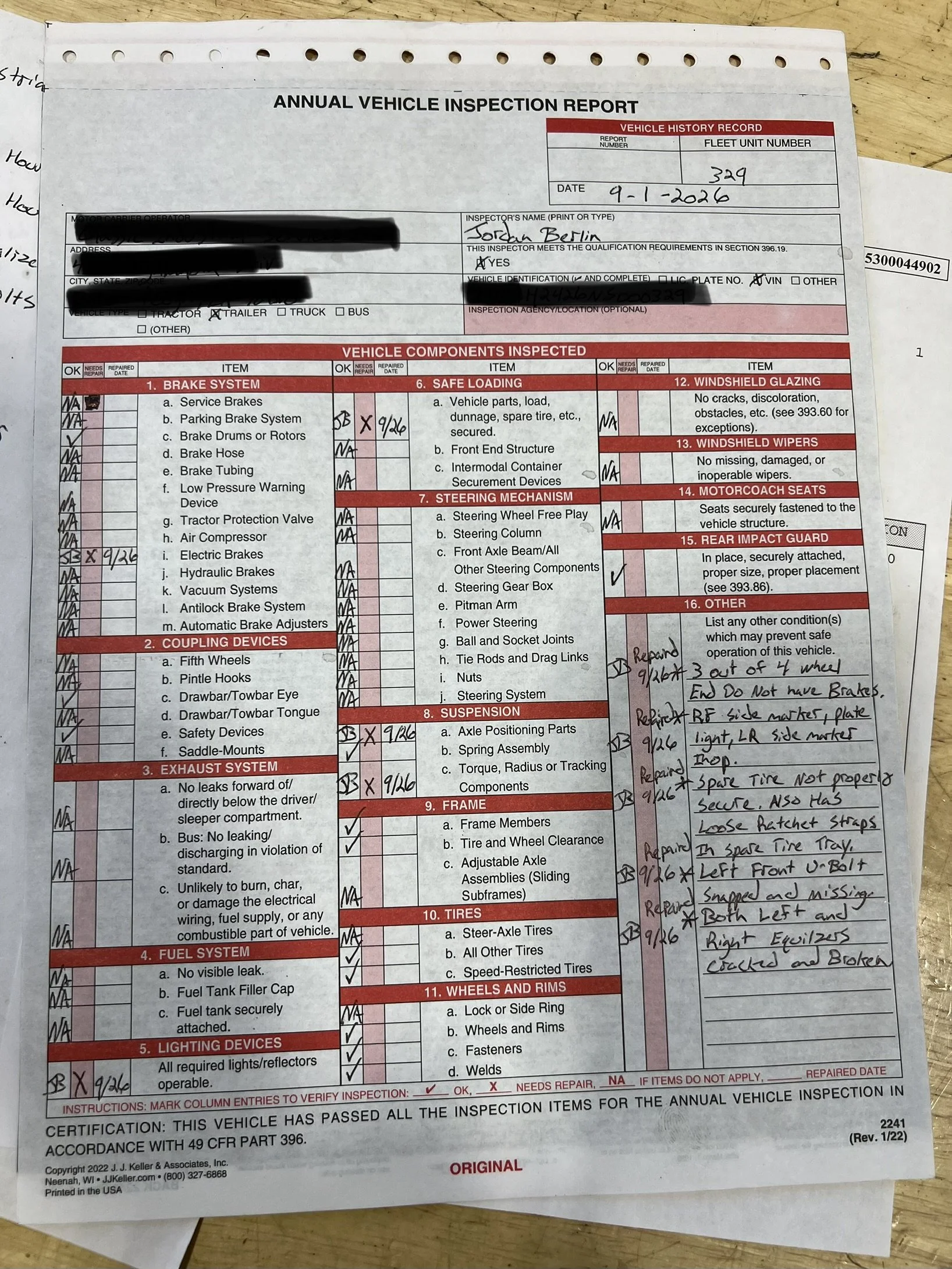
Arctic Fox Auto and Diesel provides mobile Department of Transportation (DOT) inspections for commercial vehicles, work trucks, trailers, and fleets. A DOT inspection is a structured review of safety-related equipment and operating condition. Mobile service can come to your yard, job site, or other convenient location, helping reduce downtime and avoid moving a vehicle that may need attention. Call to discuss your vehicle, text the vehicle details or inspection questions, or book an inspection through the Contact page. Before the appointment, share the vehicle type, trailer information if applicable, operating use, location, and the inspection paperwork or timing requirements.
Benefits of DOT Inspections
Regular DOT inspections help identify safety concerns before they contribute to a roadside problem, failed inspection, lost work time, or an avoidable out-of-service situation. A consistent inspection process gives owners and fleet managers better visibility into vehicle condition and a clearer maintenance plan. Depending on the vehicle and inspection type, checks may include brakes, tires and wheels, lights and reflectors, steering, suspension, frame and body components, coupling devices, emergency equipment, fluid leaks, and other required safety items. Early findings can help prioritize repairs, document condition, support preventive maintenance, and keep vehicles working safely. Inspections can also help reveal wear caused by heavy loads, towing, winter weather, road salt, rough roads, construction sites, and high commercial mileage before a small issue affects the workday.
What the Inspection Covers
The inspection begins with basic vehicle and service information, followed by a systematic review of accessible safety components. The exact inspection scope depends on the vehicle, its operation, and the inspection requested. Common concerns include worn brake parts, low or uneven tire tread, damaged sidewalls, loose wheel hardware, defective lights, steering looseness, suspension wear, cracked or damaged components, leaking fluids, missing safety equipment, and problems with trailers or coupling systems. If a concern is found, the condition is explained clearly so the owner or fleet manager can decide what should be repaired before the vehicle returns to service. Allow time for the inspection and have the vehicle safely accessible, reasonably clean around inspection points, and available with relevant records or documents. The inspection is a safety review, not a substitute for repairs that may be needed, and requirements can vary by vehicle and jurisdiction.